
How to Create a Moving Binder: Essential Guide for an Organized Move
Ever feel like moving turns your whole life into a pile of random papers, missing receipts, and mystery sticky notes?
My day at Fly Guy Moving Company is trucks, dollies, tape guns, heavy furniture, and making sure people’s stuff gets from one place to another in one piece.
But there’s one thing I’ve noticed over and over:
The most relaxed, organized customers almost always have one simple thing… a moving binder.
Nothing fancy. Just a basic binder where they keep everything related to the move. When I ask a question — “What’s the new address?” “What time is the elevator booked?” “Where’s the contract?” — they open that binder and boom, it’s right there.
This guide isn’t going to be pretty or poetic. It’s going to be practical. I’m going to walk you through how to create a moving binder step by step, what to put in it, and how to actually use it on moving day, so you’re not tearing open boxes looking for one paper.
If you want your move to feel more like a plan and less like chaos, start here.
What Exactly Is a Moving Binder (And Why You Need One)
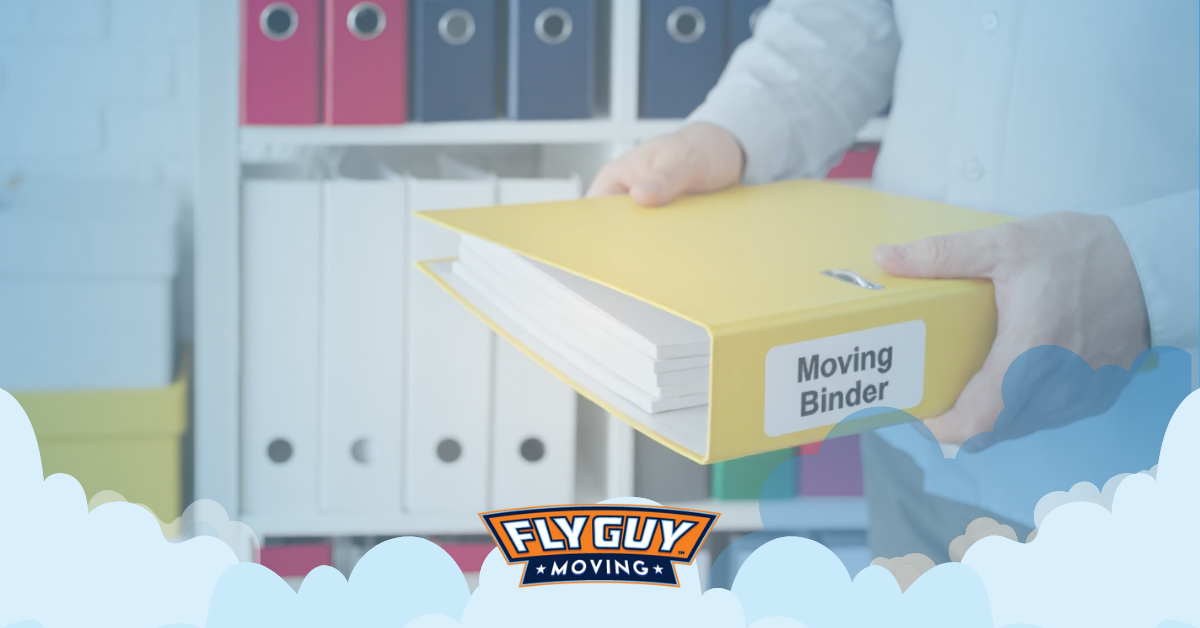
A moving binder is just this:
One place where every important detail about your move lives.
No more:
- Digging through email for that one quote
- Trying to remember which box has the router
- Call your landlord because you lost the move-out checklist
As a mover, I can tell you this: when a customer has a moving binder, the whole day goes smoother. They know their schedule. They know where we can park. They know which boxes are fragile or “open first.” There are fewer surprises and fewer panicked “Wait, I think that form is in… some bag… somewhere.”
A moving binder is especially helpful if:
- You have kids or pets
- You’re moving long-distance
- You’re juggling work, family, and packing at the same time
- You’re selling a home or dealing with a lot of paperwork
In short: if you want less stress and more control, this little binder does a lot of heavy lifting.
These organized moving tips form the foundation of a successful relocation.
Moving Binder Basics – What You Need to Get Started
You don’t need anything fancy or expensive. Here’s all you really need.
The Supplies
- Binder – 1" or 1.5" ring binder works for most moves
- Sheet protectors – for contracts, checklists, floor plans
- Dividers or tabs – to separate each section
- Loose-leaf paper or a notebook – for notes and to-do lists
- Sticky notes – for quick reminders
- Pens and a highlighter – keep them in the binder
- Optional: zipper pouch – for keys, USB drives, small screws, and receipts
You can grab all of this at any office supply store, big box store, or even a dollar store.
Paper vs. Digital (or Both)
You can do this digitally — like a folder in Google Drive or your notes app — but here’s my honest mover opinion:
- Digital is great for backup.
- Physical binder is better on moving day.
On a hectic day when your phone battery is dying, Wi-Fi is sketchy, and you’ve got movers asking questions, a real binder you can toss on the counter and flip through just works.
The sweet spot:
- Use digital for saving copies of important documents.
- Use a physical binder as your “command center” on moving day.
The DIY moving binder will evolve as your move progresses. Start with the information you already have, like moving company estimates you've gathered or an initial budget you've sketched out.
How to Set Up Your Moving Binder Step by Step
You don’t have to set this up perfectly on day one. Start simple and build as you go.
Step 1 – Pick Your Sections
Begin by choosing a few basic tab sections like:
- Contacts & Info
- Timeline & To-Do Lists
- Home Details
- Inventory & Box List
- Receipts & Budget
- Utilities & Services
- Family & Pets
You can add more later, but don’t overcomplicate it at the start. The goal is to find things fast, not create a 300-page manual.
Step 2 – Add the Most Important Stuff First
Before you get cute with colors and labels, drop in the critical items:
- Lease or closing documents
- Moving company contract and contact info
- Your old and new addresses
- Moving date and time
- Elevator/parking reservations if you have them
If the binder only had those things in it, it would already be useful.
Step 3 – Fill It In As You Go
Don’t wait until the week before your move. As soon as you start planning:
- Print quotes and put them in
- Add checklists and timelines
- Jot down questions for your landlord, realtor, or movers
- Staple or slide receipts into sheet protectors
Think of your binder as a living thing. Every time you make a move-related decision or get a new piece of info, it goes in there.
Must-Have Sections for an Effective Moving Binder
Now let’s break down each section and what to put inside.
1. Contacts & Key Information
This is your quick-reference page — the one you’ll use the most.
Include:
- Landlord or property manager
- Realtor or closing attorney
- Moving company (like Fly Guy Moving) – main office & crew leader
- Storage facility, if you’re using one
- Utility companies (electric, gas, water, trash)
- Internet and cable provider
- Insurance agent (home, renters, auto)
Write down:
- Names
- Phone numbers
- Email addresses
- Account numbers, if you have them
When a problem pops up, you won’t be hunting through your inbox. You just flip to this section and call.
2. Moving Timeline & To-Do Lists
This section keeps you from leaving everything to the last minute.
You can break it down like:
- 30 days before:
- Book movers or a truck
- Sort and declutter
- Start packing out-of-season items
- 14 days before:
- Change address with USPS
- Confirm move-in/move-out times
- Schedule utility shutoff and turn-on
- 7 days before:
- Pack most of the house
- Label “open first” boxes
- Confirm details with your moving company
- Moving day:
- Final walk-through of the old place
- Take meter photos
- Check each room before leaving
Use simple checklists. Don’t try to be perfect. The point is to see what’s done and what’s not.
3. Home & Apartment Details
This section is about the old place and the new place.
Include:
- Old and new addresses
- Parking info (where can the truck park? any permits needed?)
- Building rules and move-in/move-out instructions
- Elevator reservation confirmations (time windows, deposits if any)
- Gate codes or access instructions
- Basic floor plan or sketch of your new place
As movers, we love when people have this info ready. It helps avoid tickets, angry neighbors, and delays.
4. Inventory & Box List
This is the section that saves you at 10 p.m. when someone asks, “Where’s the coffee maker?”
You can keep it simple:
- Number your boxes: Box 1, Box 2, Box 3…
- On your inventory sheet, write:
- Box number
- Room
- A quick list of key items inside
Example:
- Box 7 – Kitchen – pots, pans, cutting boards
- Box 14 – Bedroom – winter clothes, extra blankets
Also include:
- A separate list for “Open First” boxes – things like:
- Basic kitchen supplies
- Toiletries
- Sheets and pillows
- A couple of days of clothes
Your future self will thank you when you don’t have to open 12 boxes just to find a plate.
5. Receipts, Quotes & Budget
Moving can get expensive, and it’s easy to lose track.
In this section, keep:
- Moving company quotes and final contract
- Truck rental receipts
- Packing supply receipts (boxes, tape, bubble wrap)
- Storage unit costs
- Cleaning service or repair receipts
- Donation receipts if you’re giving items away
If you’re budgeting your move, you can also include a simple page for:
- Estimated costs vs. actual costs
- Notes about what was worth paying for and what wasn’t
This can help for future moves or for tax purposes if certain costs are deductible in your situation (talk to a tax pro about that part).
6. Utilities & Services
Nothing kills the joy of move-in day like realizing you forgot to turn on the power or internet.
Use this section to track:
- Electric, gas, water, sewer, trash
- Internet and cable
- Security system
- Any subscription services tied to your address
For each one, note:
- Company name
- Account number
- Shutoff date at the old place
- Turn-on date at the new place
- Confirmation numbers
You can also add a checklist:
- Take photos of meter readings on move-out day
- Return cable or internet equipment
The
City of Minooka website provides information about local utilities and services. Research providers in advance so you can schedule connections before moving day.
7. Family, Kids & Pets
If it’s just you and a couple of boxes, this might be overkill. But if you’ve got kids, pets, or both, this section is gold.
Include:
- School records and contact info
- Immunization or medical records you might need
- Vet records and vaccination info
- Pet microchip numbers and tags
- A simple “moving day plan” for kids and pets:
- Who’s watching them
- Where they’ll be
- What they need packed in a separate bag (snacks, toys, meds, etc.)
Trust me: moving day is loud, busy, and doors are open a lot. Planning ahead for kids and pets helps keep everyone safer and calmer.
School records are essential if you have children. The
Minooka Intermediate School and other local schools will need official transcripts, report cards, and any IEP documentation.

Pro Tips from a Mover for Using Your Binder on Moving Day
Here’s where my mover brain kicks in.
- Keep the binder with you, not in a box.
Treat it like your wallet or phone. It rides with you, not in the truck. - Use it as your “control center.”
Set it on the kitchen counter or a small table. When anyone has a question — movers, landlord, family — you go to the binder. - Use your box list for fast answers.
Instead of digging through stacks of boxes, flip to your inventory: - “Coffee maker? Box 4, Kitchen.”
- “Router? Box 2, Office.”
- Write down problems or damage right away.
If something gets scratched, broken, or looks off, jot it in the binder, note the time, and snap a photo on your phone. - Print and clip photos if they matter.
Parking instructions, building rules on the lobby wall, meter readings — you can even print these and stick them in the binder later for your own records.
Your binder isn’t just a stack of papers. On move day, it’s your brain in a book.
Many families find it helpful to visit the Aux Sable Creek area or other local spots to get familiar with their new neighborhood during planning visits.
Common Mistakes People Make (And How Your Binder Prevents Them)
Here are some things I see all the time — and how this binder helps:
- Forgetting to schedule utilities on time
→ Your utilities section and timeline checklist keep those dates in front of you. - Losing the moving contract or quote
→ It’s in sheet protectors in the “Receipts & Quotes” section, easy to grab. - Not labeling boxes clearly
→ Your inventory & box list forces you to stay organized as you pack. - Misplacing keys, remotes, screws, or hardware
→ Your zipper pouch in the binder is the “catch-all” spot for small important things. - Overpacking one room and underplanning another
→ Your timeline and to-do lists help you pace yourself room by room.
The binder doesn’t magically make the move easy, but it does stop a lot of the avoidable headaches.
Simple Moving Binder Templates You Can Copy
You don’t have to reinvent the wheel. Here are two quick setups you can copy.
For a small apartment or solo move:
- Contacts & Key Info
- Timeline & To-Do
- Home Details
- Inventory & Box List
- Receipts & Budget
For a family or bigger home:
- Contacts & Key Info
- Timeline & To-Do
- Old Home Details
- New Home Details
- Inventory & Box List
- Utilities & Services
- Family, Kids & Pets
- Receipts, Quotes & Budget
Write these as tab names, and you’re ready to roll. Even snapping a picture of this list and using it at the store will help you set it up fast.

Final Thoughts – A Small Tool That Makes a Big Difference
You don’t need a “perfect” moving binder. You just need a useful one.
Grab a binder, pick a few sections, and start throwing everything move-related into it. As the days go by, it will naturally grow into the command center for your move.
From my side — the mover’s side — I can tell you straight: We recommend reviewing your
comprehensive moving guide to ensure you haven't missed any crucial tasks.
We see the difference on moving day when people use a moving binder. They’re calmer, more prepared, and we can do our job faster and better because the info we need isn’t lost in a random box.
And if you ever decide to work with Fly Guy Moving Company, just know this: we actually appreciate an organized move. Show up with your moving binder, and we’ll meet you with the trucks, muscle, and know-how to get the rest done.
Contact Fly Guy Moving today to schedule your move and experience the difference that professional service and thoughtful planning make.