How to Measure Furniture Before Moving: Professional Moving Tips
Moving day arrives, the truck is loaded, and your favorite couch gets stuck in the doorway. At Fly Guy Moving, we’ve seen countless customers struggle with furniture that didn’t make it past the first doorway. We’ve been there more times than we can count, watching that moment of panic set in.
Here’s the thing: learning how to measure furniture before moving saves time, money, and frustration.
This guide covers everything, from basic measuring tools to handling tricky spaces, such as narrow staircases. We’re sharing our professional measuring techniques that help our customers move smoothly every single time.
Why Measuring Furniture Before Moving Matters
Measuring furniture before moving protects your belongings and your budget. We've watched customers skip this step only to face expensive problems on moving day. Accurate measurements prevent damage to your furniture, walls, and door frames during the move. Understanding your furniture dimensions helps you plan the entire moving process more effectively. Measuring furniture for moving creates a smoother experience from start to finish.
1. Avoiding Doorway and Hallway Problems
- Prevents furniture from getting stuck in doorways (standard doorways are only 32-36 inches wide)
- Helps navigate narrow hallways and tight corners
- Allows you to plan diagonal carry methods when needed
2. Planning Your New Space Layout
- Visualize furniture placement before moving day
- Ensure furniture fits in designated rooms
- Maintain proper walking space (30 inches) between furniture pieces
- Avoid discovering that your furniture overwhelms your new rooms
3. Getting Accurate Moving Quotes
- Helps moving companies provide honest, reliable pricing
- Prevents surprise charges on moving day
- Allows movers to plan the right crew size and equipment
- Accounts for specialty items needing extra resources
4. Preventing Damage
- Protects your furniture from damage during the move
- Prevents damage to walls, door frames, and floors
- Reduces risk of scrapes, dents, and scratches
- Ensures safe navigation through tight spaces
5. Saving Time and Money
- Eliminates the need to rearrange furniture multiple times
- Prevents paying to move furniture that won't fit
- Reduces moving day delays and frustration
- Avoids costly mistakes from poor planning
Families moving to areas served by Minooka Community Consolidated School District 201 should consider room layouts that accommodate children's homework spaces and storage needs.
Common Tools You Need for Measuring Furniture
Having the right measuring tools makes furniture measurement quick and accurate. We use a simple toolkit that covers every measuring situation we encounter. This furniture measurement guide shows you exactly what you need without expensive equipment investments.
1. Tape Measure
- 25-foot tape measure recommended
- Should have a locking mechanism for easy solo use
- At least 1 inch wide for stability
2. Notepad or Smartphone
- For recording measurements immediately
- Creating simple sketches of furniture pieces
- Labeling dimensions clearly
- Prevents confusion during multi-item measuring sessions
3. Level
- Confirms that furniture sits evenly before measuring
- Prevents measurement errors from uneven furniture
- Ensures accuracy when calculating clearances
4. Painter's Tape
- Marks measurement points without causing damage
- Indicates height markers or corner points
- Creates visual references for large or oddly-shaped items
- Removes cleanly without leaving residue
Digital Apps That Make Measuring Easier
Smartphone measuring apps bring technology to traditional furniture measurement tasks. Apps like RoomScan and MagicPlan create floor plans using your phone's camera. Augmented reality features in some apps overlay furniture dimensions onto real spaces.
Digital tools complement but don't completely replace traditional measuring methods. We always verify app measurements with physical tape measures for critical dimensions. Using both digital and traditional tools together produces the most reliable results.
Expert Tips for Measuring Furniture Correctly
Learning the proper furniture measurement technique ensures accuracy every single time. We follow a systematic approach that captures every dimension you need. Consider this your go-to furniture measurement guide for handling everything from small end tables to oversized armoires.
How to Measure Height, Width, and Depth
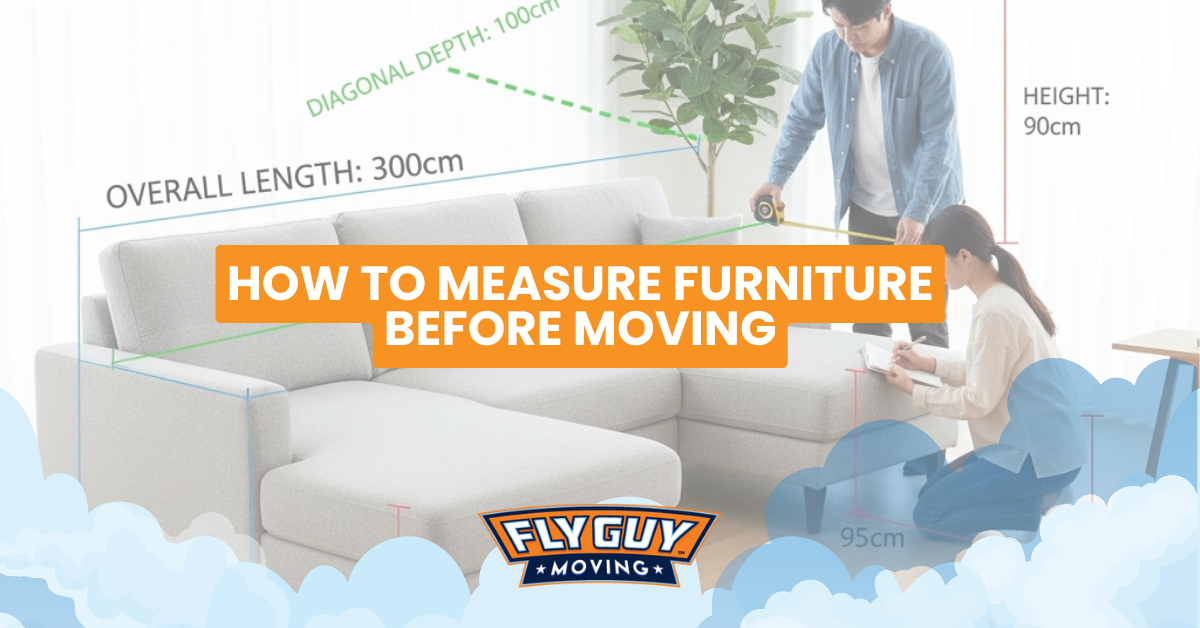
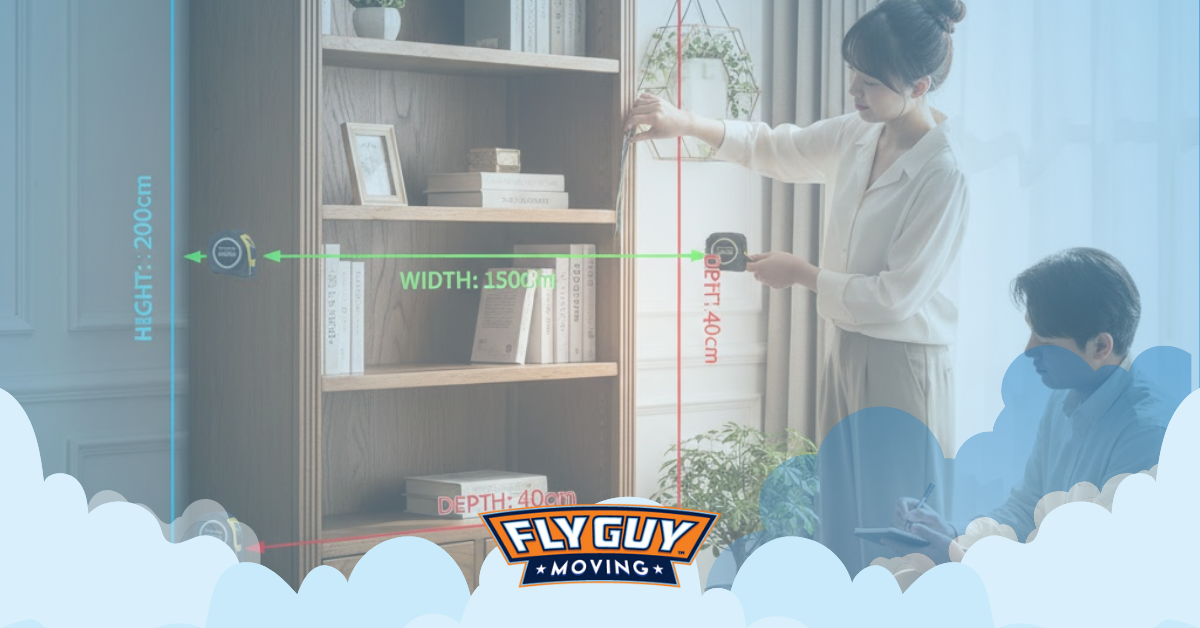
Start by identifying the three basic dimensions of any furniture piece. Height measures from the floor to the highest point of the furniture. Width spans the widest point from left to right when facing the piece. Depth extends from the front edge to the back edge of the furniture.
Always measure the widest, tallest, and deepest points of each furniture piece. Decorative elements like finials, handles, or protruding legs often create these maximum dimensions. Record measurements in a consistent format to avoid confusion later.
We write dimensions as Height x Width x Depth in that specific order.
Measuring Couches and Sectionals
Measuring large furniture like sectionals demands extra attention to detail. Couches require measuring multiple dimensions because of their complex shapes.
Start with the overall length from arm to arm at the widest points. Measure the height from the floor to the top of the back cushions.
Diagonal measurements often determine whether a couch fits through tight spaces. Measure from the bottom front corner to the top back corner.
Sectional sofas need each piece measured separately for accurate planning. Couch legs and feet add critical inches to overall dimensions when measuring large furniture pieces.
Measuring Beds and Mattresses
Bed frames and mattresses require separate measurements for moving purposes.
Start by measuring the mattress alone: length, width, and thickness at the thickest point. Always measure your specific mattress rather than assuming standard sizes.
Bed frames add height and often extend beyond mattress dimensions. Measure the frame's overall length, width, and height with the mattress removed. Headboards and footboards frequently disassemble from bed frames for easier moving.
Measuring Dressers and Armoires
Dressers need measurements with drawers both closed and fully extended. Height measurements should include any mirrors attached to dressers. Armoires and wardrobes rank among the tallest furniture pieces in most homes.
Depth measurements for dressers must account for protruding hardware and decorative elements. We always measure from the wall to the furthest protruding point. These extra inches matter when calculating clearances through doorways and around corners.
Measuring Oddly-Shaped Furniture
Oddly-shaped furniture presents unique measuring challenges that require creative approaches. L-shaped desks, corner cabinets, and curved entertainment centers don't fit standard measurement methods. We break these pieces down into smaller sections and measure each part individually.
Start by identifying the longest point in every direction for irregular furniture pieces. Curved furniture needs measurements at the widest curve point, not just the straight edges. Round tables require diameter measurements plus the apron depth underneath the tabletop.
Modular furniture and entertainment centers often disassemble into manageable sections. Measure each component separately and note how the pieces connect. This approach helps us determine the best disassembly strategy for moving day.
Measuring Doorways, Hallways, and Staircases
Room access points need just as much attention as furniture dimensions. We measure every doorway, hallway, and staircase that your furniture must pass through. Knowing your clearances helps us plan the best route through your home.
Measuring Door Frames and Openings
Door frame measurements require three critical dimensions for accurate planning. Start by measuring the width of the door opening at its narrowest point. Measure the height from the floor to the top of the frame.
Always measure door openings with the door completely open and secured. We check if the doors remove from the hinges easily to gain extra clearance. Removing a door typically adds two to three inches of usable width.
Calculating Staircase Clearance
Staircase measurements involve more complexity than simple doorway calculations. Measure the width between handrails or walls at the narrowest point. Check the height from each stair tread to the ceiling or landing above.
Ceiling height over staircases limits tall furniture pieces more than most people realize. Measure the diagonal clearance from the stair tread to the ceiling above. Railing and baluster configurations affect how we angle furniture on staircases.
Checking Elevator Dimensions
Elevator measurements become critical for multi-story apartment and condo moves. Measure the interior width, depth, and height of the elevator car. Note the door opening dimensions, which are often narrower than interior dimensions.
Building service elevators often provide larger dimensions than passenger elevators. We recommend measuring and photographing both elevator types in your building. This information helps us plan the most efficient moving schedule.
Essential Furniture Measurements: Moving Inventory List
We now have the furniture measurements, so let’s set up your furniture inventory system. We recommend creating this list as you measure each piece throughout your home.
Organizing your furniture measurements into a comprehensive inventory list streamlines your entire moving process. This document becomes your reference guide for planning, packing, and unpacking at your new location.
- Start your inventory with basic categories that match how you'll pack and move. We suggest organizing by room: living room, master bedroom, kitchen, and so forth.
- Record the furniture piece name, condition notes, estimated weight, and whether it disassembles.
- Add columns for special handling requirements like fragile components or valuable antiques.
- Destination room assignments for your new home guide efficient unloading and placement.
- Write the new room name next to each furniture item in your inventory.
Digital spreadsheets work wonderfully for furniture inventories because they're easy to update and share.
What to Do When Furniture Won't Fit
Sometimes measurements reveal that furniture won't fit through available passages. We've developed solutions for these situations during our years of professional moving. Several options exist for getting furniture to your new location safely.
Disassembly Options
Modern furniture often disassembles more easily than you might expect. We start by checking if legs, arms, or other components were removed without tools. Take photos before disassembling so you remember how pieces reconnect later.
Some furniture pieces require professional disassembly to avoid damage during the process. Keep all hardware, screws, and small parts in labeled plastic bags. We tape these bags directly to the corresponding furniture piece when possible.
Alternative Moving Routes
Windows provide access options when doors won't accommodate large furniture pieces. We evaluate window dimensions, accessibility, and safety before attempting window moves. Balconies and patios sometimes offer better access than indoor routes.
External hoisting equipment lifts furniture outside your home and through upper-level windows. We only recommend this method for high-value furniture worth the additional cost.
When to Call Professional Movers
Recognizing when furniture measuring and moving exceeds DIY capabilities protects your belongings and your safety. Certain situations always warrant professional assistance, regardless of your measuring accuracy. Knowing when to call experts saves money in the long run by preventing damage and injuries.
Signs You Need Professional Help
Recognizing when to call professional movers protects both your belongings and your well-being. Here are the key signs that indicate you need professional moving help:
- Heavy furniture over 200 pounds: Items like slate pool tables, grand pianos, and solid wood armoires present serious injury risks without proper equipment. We use specialized dollies, straps, and team lifting methods to handle these pieces safely.
- Valuable or antique furniture: These irreplaceable pieces require expertise that protects their condition and value. We know how to properly wrap, pad, and secure delicate finishes and fragile components.
- Multiple flights of stairs: Large furniture combined with staircase navigation creates dangerous moving scenarios for amateurs. This expertise becomes invaluable when navigating the tight turns found in many Minooka homes.
- Minimal clearance spaces: Tight doorways and narrow hallways that leave less than two inches of clearance require professional maneuvering skills. We have techniques for threading furniture through impossibly tight spaces without damaging walls or pieces.
Grundy County has specific requirements that legitimate moving companies must meet.
Benefits of Professional Measuring and Moving
Professional movers deliver advantages that extend far beyond simple muscle power and trucks. Here are the key advantages of hiring professional movers:
- Expert measuring and planning: Professional movers bring measuring expertise that catches problems DIY measurers often miss. We know exactly which dimensions matter most for different furniture types and spaces.
- Comprehensive insurance protection: Liability insurance and workers' compensation protect you from financial disaster during moves. DIY moves leave you personally liable for all damages and injuries that occur.
- Specialized moving equipment: Professional moving equipment makes seemingly impossible furniture moves completely manageable. We own furniture dollies, appliance straps, stair rollers, and protective padding designed specifically for moving.
- Significant time savings: What takes an experienced crew two hours might consume your entire weekend without professional efficiency. We know the fastest routes through homes and optimal truck loading patterns.
If you are looking for a reference guide for planning, packing, and unpacking, our complete moving guide offers detailed information about moving day preparations.
Conclusion
Look, we get it — measuring furniture might not sound like the most exciting part of moving. But it’s one of those small things that makes a huge difference when it comes to ensuring a stress-free relocation. These measurements, combined with a detailed inventory list, create the foundation for successful moves.
Fly Guy Moving brings this same meticulous attention to detail to every Minooka relocation we handle. Once settled, families can explore community amenities through the Minooka Park District to make their new house feel like home.
Our experienced team knows exactly how to measure furniture before moving and navigate any challenging space. Whether you're relocating within the Village of Minooka or moving to our community from elsewhere, contact Fly Guy Moving today for a free quote and let us handle your next move with the expertise you deserve.